The problem
Smallholder farmers in eastern Africa often do not earn much from their arduous work.
They struggle to unlock the potential of their produce and get a good price for their crops.
Many are unable to access markets, which restricts their bargaining power and forces them to sell their crops at a lower price.
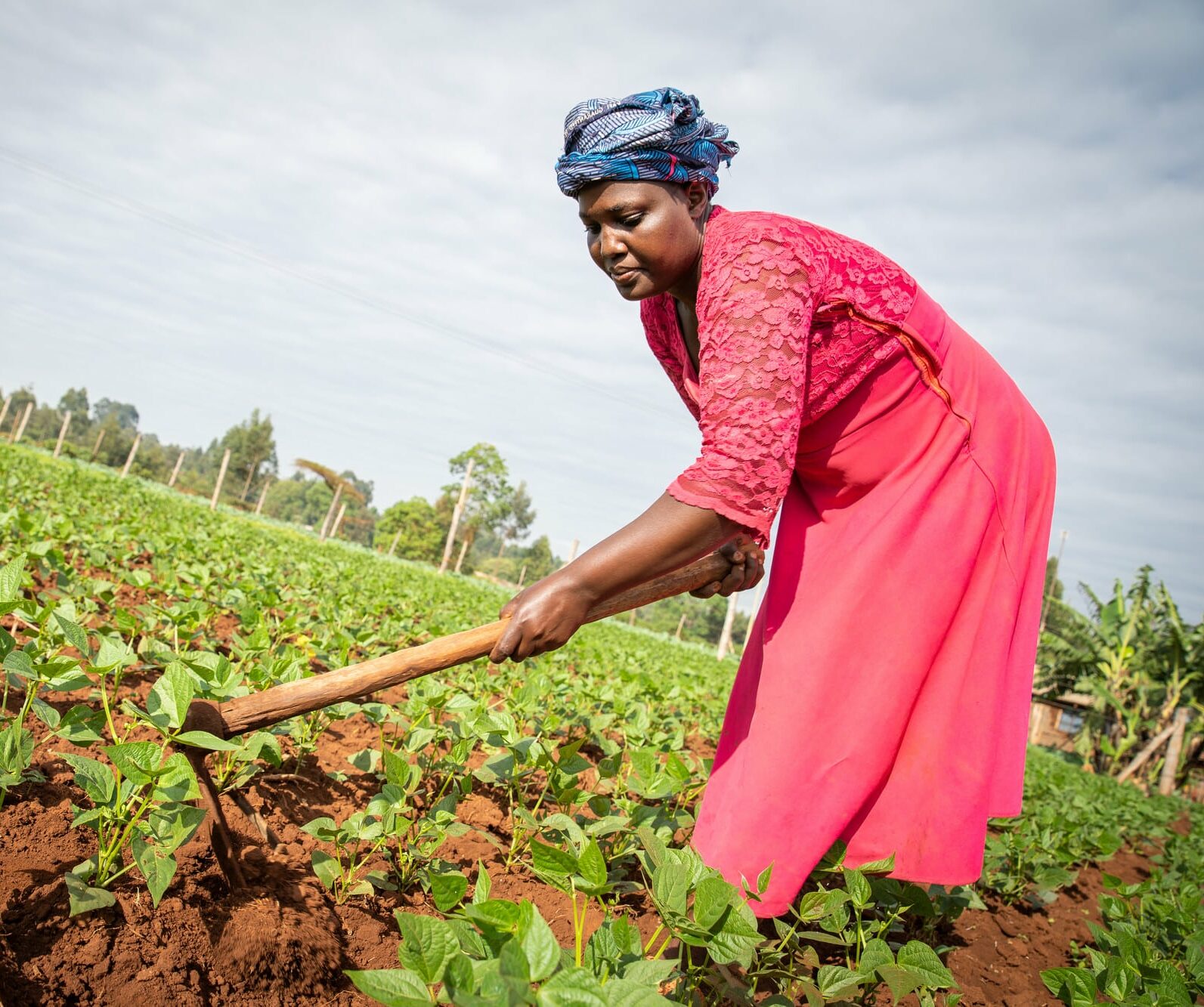

Subsistence farming is prevalent in rural communities and can perpetuate the cycle of poverty. Many farmers grow just enough for their family’s consumption, with little surplus to sell.
Without sufficient incomes, farmers cannot invest in their harvests, keeping them in a state of low yields and low incomes.

The opportunity
When farmers increase their incomes, they can invest in their farms. Increasing the quality and quantity of farmers' produce is a key factor in boosting their incomes.
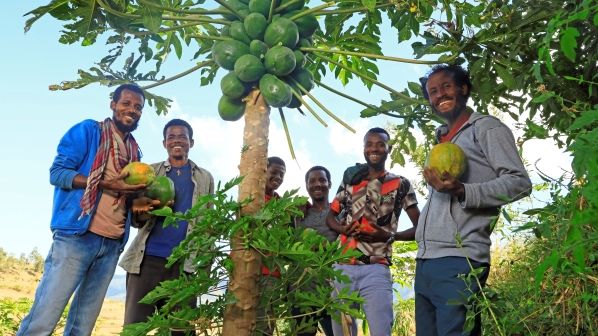
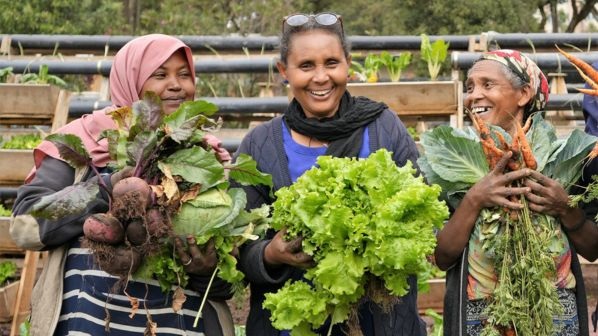
Diversification allows farmers to access a wider range of markets as it reduces their dependency on a single crop. This is particularly important in eastern Africa, where climate change continues to impact the environment.
Connecting farmers to markets is crucial too. Identifying and tapping into consumer demand can help farmers to sell more and sell for more, while co-operatives allow farmers to work in groups and sell in bulk, which attracts high-value buyers.
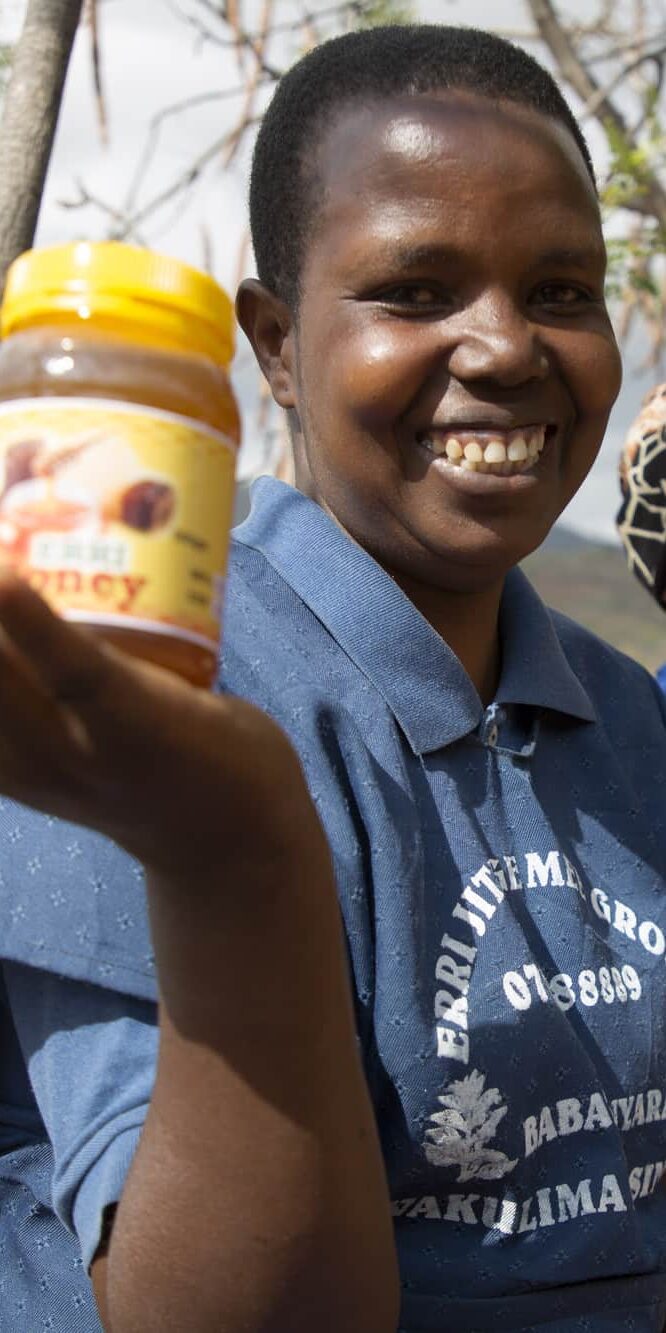
Value addition also boosts incomes – when farmers process and market a product into something new, they can sell it for more.

The outcome
Higher incomes lead to better living standards, enabling farmers in eastern Africa to feed their family, pay for their children’s education and improve their homes.
When women’s incomes rise in particular, it is shown to have a wider benefit for all. They tend to invest more in their children and community. And as women’s financial independence grows, whole communities have the potential to become more equitable.
Farmers can invest in new technologies like drought-tolerant seeds, which can mitigate the impacts of climate change. Farmers can then boost their productivity and enjoy more stable yields, even in dry conditions.
Higher incomes allow farmers to diversify their farming, by growing crops and rearing livestock, which builds their climate resilience and promises stable incomes.


How we increase incomes
- We work with farmers to increase the quality and therefore the value of their produce by training them in good agricultural practices and providing them with access to high-quality seeds.
- We support farmers to diversify their farming so they can enjoy yields and incomes throughout the year.
- Connecting farmers to markets is a vital part of our work. We take a business approach to farming so they can sell more and sell for more.
- We help smallholder farmers to build co-operatives so they can sell in bulk.
- We train smallholders in post-harvest handling so they can extend their crops’ shelf life, stagger harvests and add value to their produce.
- We work with smallholder farmers to add value to their produce, processing and marketing them into different products.
- We work with farmers to use their surplus produce, which not only reduces food loss, it also provides extra income.
- We help to establish Village Savings and Loan Associations, which enable people in rural areas, especially women who often have limited access to finance, to come together and save money as a group and access loans. With easy access to finance, women can invest in small businesses and increase their incomes.

The latest on boosting incomes


Watch






Related resources
Country
Ethiopia
Key focus areas
Act on climate change
Increase incomes
Protect ecosystems
The Forests for Sustainable Development programme: stories of impact
This publication captures the progress of the Forests for Sustainable Development programme as it partners with communities in the ecologically critical Bale Eco-region of Ethiopia to balance local livelihood needs with the protection of globally significant natural forests. Alongside the impact summary is a collection of stories from the community and an overview of key lessons learnt along the way.
Download (2.86mb)

Country
Ethiopia
Key focus areas
Act on climate change
Increase incomes
Protect ecosystems
Country
Kenya
Key focus areas
Boost youth employment
Increase food security and nutrition
Increase incomes
Impact stories from the YISA programme quarter 3 2025
A collection of stories from June to August 2025 from the Youth in Sustainable Aquaculture, a partnership programme in Kenya with the Mastercard Foundation and consortium partners led by Farm Africa that aims to strengthen resilient livelihoods through innovative aquaculture practices, enabling work opportunities for young women and men.
Download (4.96mb)

Country
Kenya
Key focus areas
Boost youth employment
Increase food security and nutrition
Increase incomes
Country
Ethiopia
Key focus areas
Act on climate change
Increase incomes
Protect ecosystems
Strengthening Participatory Forest Management in Ethiopia
This policy brief outlines recommendations from Tree Aid and Farm Africa on how participatory forest management can be strengthened and scaled to protect Ethiopia’s forests.
Download (1.46mb)

Country
Ethiopia
Key focus areas
Act on climate change
Increase incomes
Protect ecosystems
Country
Kenya
Key focus areas
Act on climate change
Boost productivity
Increase incomes
SAVES project factsheet
With funding from AGRA, Farm Africa’s Sustainable agricultural value chain enterprises in central Kenya (SAVES) project is creating sustainable and inclusive agricultural systems that increase food security, incomes and climate resilience for smallholder farmers and broader rural communities in Meru, Kirinyaga and Laikipia counties.
Download (1.37mb)

Country
Kenya
Key focus areas
Act on climate change
Boost productivity
Increase incomes
Country
Kenya
Key focus areas
Boost productivity
Boost youth employment
Increase incomes
Impact stories from the YISA programme
A collection of stories from the Youth in Sustainable Aquaculture, a partnership programme with the Mastercard Foundation and consortium partners led by Farm Africa that aims to strengthen resilient livelihoods through innovative aquaculture practices, enabling work opportunities for young women and men.
Download (3.33mb)

Country
Kenya
Key focus areas
Boost productivity
Boost youth employment
Increase incomes
Country
Regional
Key focus areas
Boost youth employment
Increase food security and nutrition
Increase incomes
Forty years of impact
To mark Farm Africa’s 40th year, past and present Farm Africa project participants share stories of the impact the charity has had on their lives.
Download (767.18kb)

Country
Regional
Key focus areas
Boost youth employment
Increase food security and nutrition
Increase incomes

