The problem
Small-scale farmers, who often rely on rain-fed agriculture, are bearing the brunt of the climate crisis, with very little support to adapt to climate extremes.
Increased temperatures, reduced rainfall and more frequent extreme weather events are reducing small-scale farmers’ yields, incomes and food security.


Many small-scale farmers have limited knowledge on climate-smart agricultural practices and lack access to the high-quality inputs, such as seeds for drought-tolerant crops, they need to adapt to climate change.
Female farmers have the lowest access to resources and are the most vulnerable to climate change.

The opportunity
Farm Africa's experience has shown that with access to the right inputs such as improved seeds, training on climate-smart agricultural practices and access to finance and markets, farmers can triple their yields, and boost incomes by 50% even in the face of climate change.
Increased productivity reduces the need to expand farming land, which reduces deforestation and therefore reduces carbon emissions. Meanwhile, improved post-harvest practices cuts emissions from food loss.
Planting trees captures carbon and builds farms' resilience to weather extremes.
Diversification is important to reducing vulnerability to climate extremes. Farmers rearing livestock as well as growing a range of crops have less chance of losing everything when droughts or floods hit.
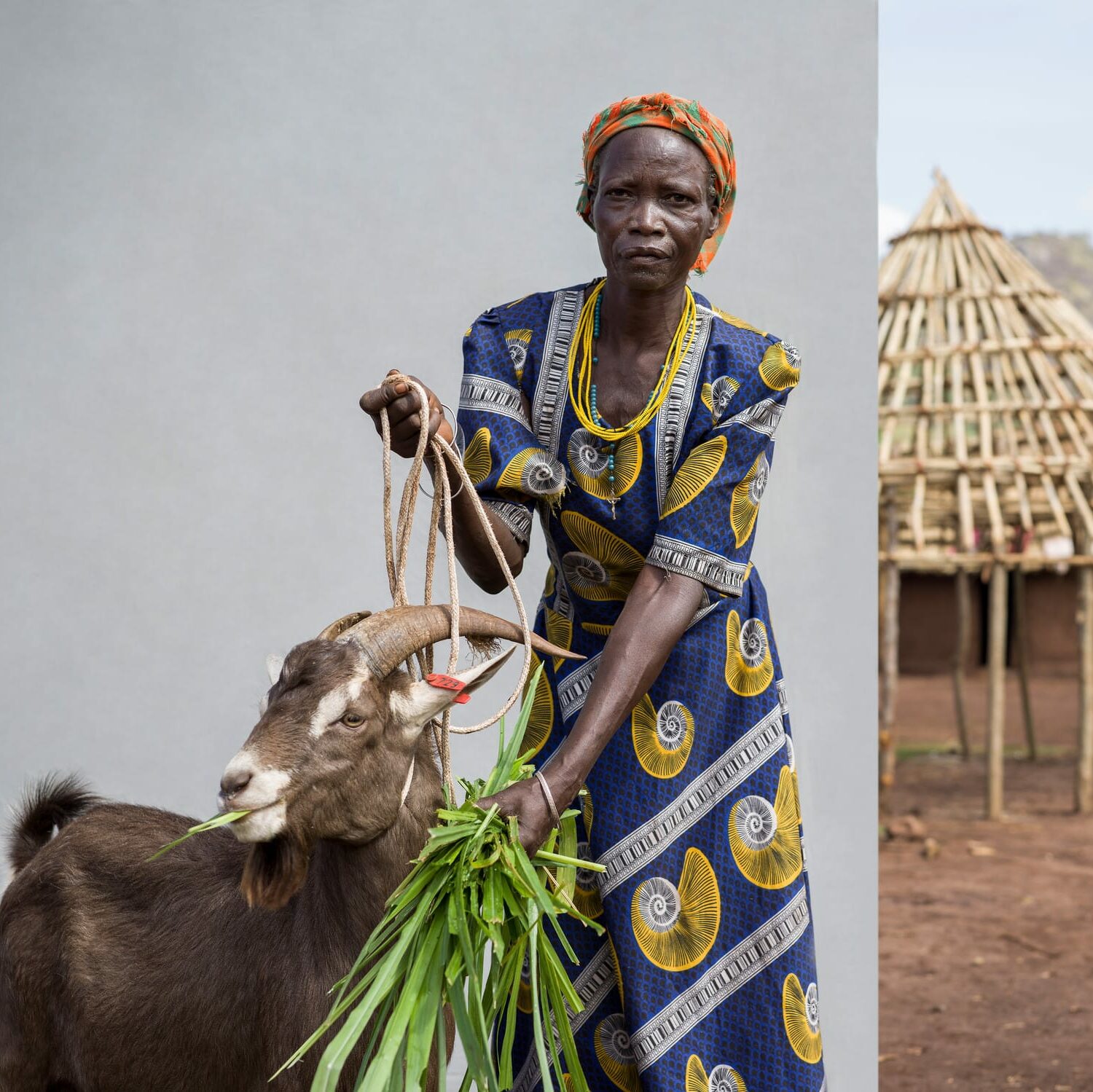
Rearing livestock such as goats and camels, which are more resilient to drought, ensures pastoralists and agro-pastoralists sustain their livelihoods in the face of climate change.

The outcome
When rural communities adopt climate-smart agricultural practices, it not only reduces poverty and food insecurity, but helps to mitigate carbon emissions through increased carbon sequestration.
This is an important consideration given that food systems account for a third of total man-made greenhouse gas emissions heating up our planet.
Investment in climate-smart agriculture also empowers farmers to protect and restore biodiversity and sustainably manage watersheds.

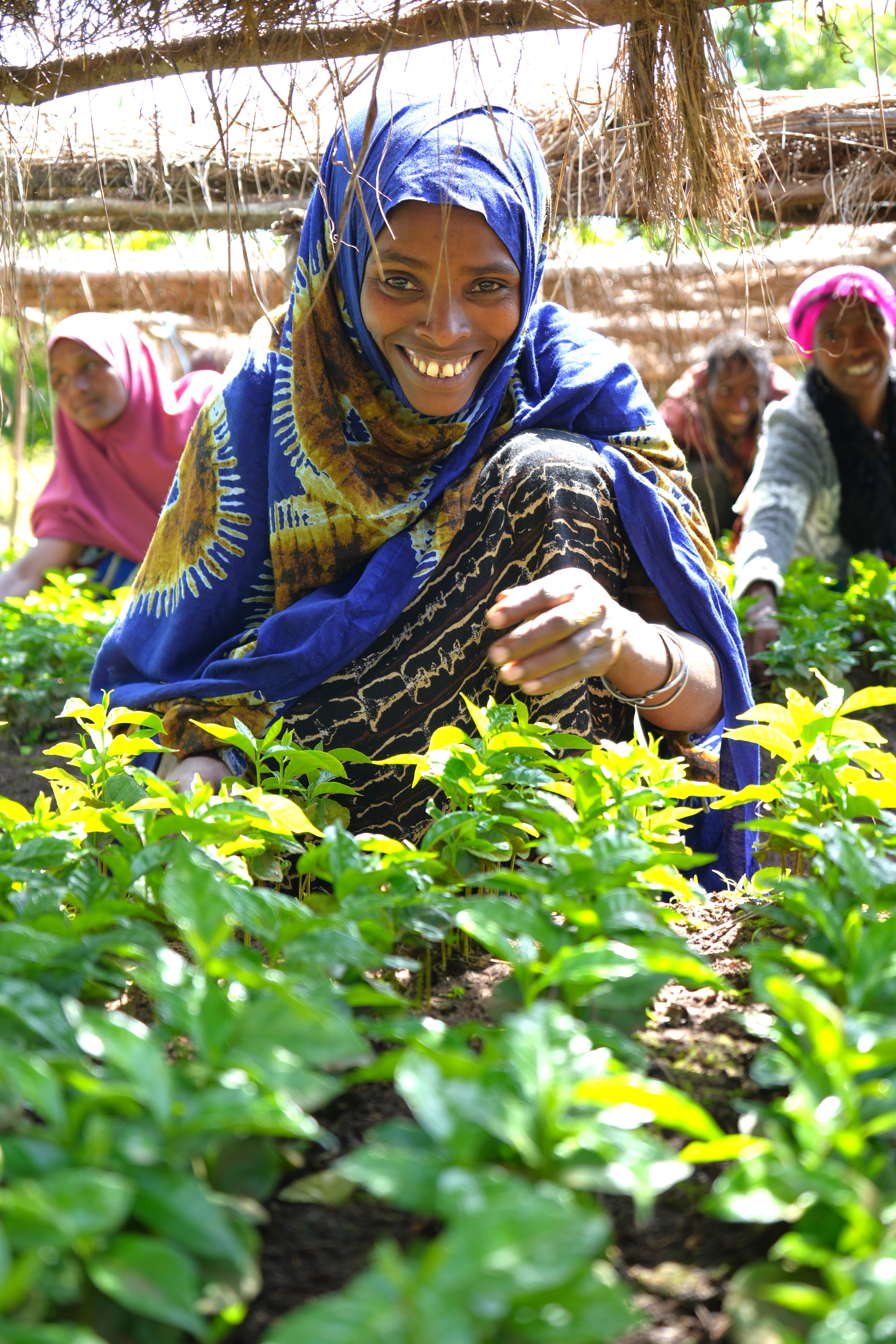
How we act on climate change
Farm Africa supports rural communities in eastern Africa to adapt to climate extremes and to reduce agriculture’s contribution to climate change. Our support includes:
- Introducing regenerative agriculture practices such as using mulch and manure, minimum tillage, micro-dosing of fertilisers and intercropping, which improve soil health and retain moisture in the soil, enabling farmers to boost their yields.
- Improving storage and drying of crops to reduce food loss and waste.
- Expanding access to financial services so that farmers can access credit to invest in improved seeds and fertilisers needed to grow drought-tolerant crops.
- Helping farmers reduce their risk by diversifying the crops they grow; rearing livestock as well as growing crops; and setting up secondary non-farming businesses.
- Introducing agroforestry, meaning farmers plant trees alongside their crops, which improves soil fertility and removes carbon from the atmosphere.
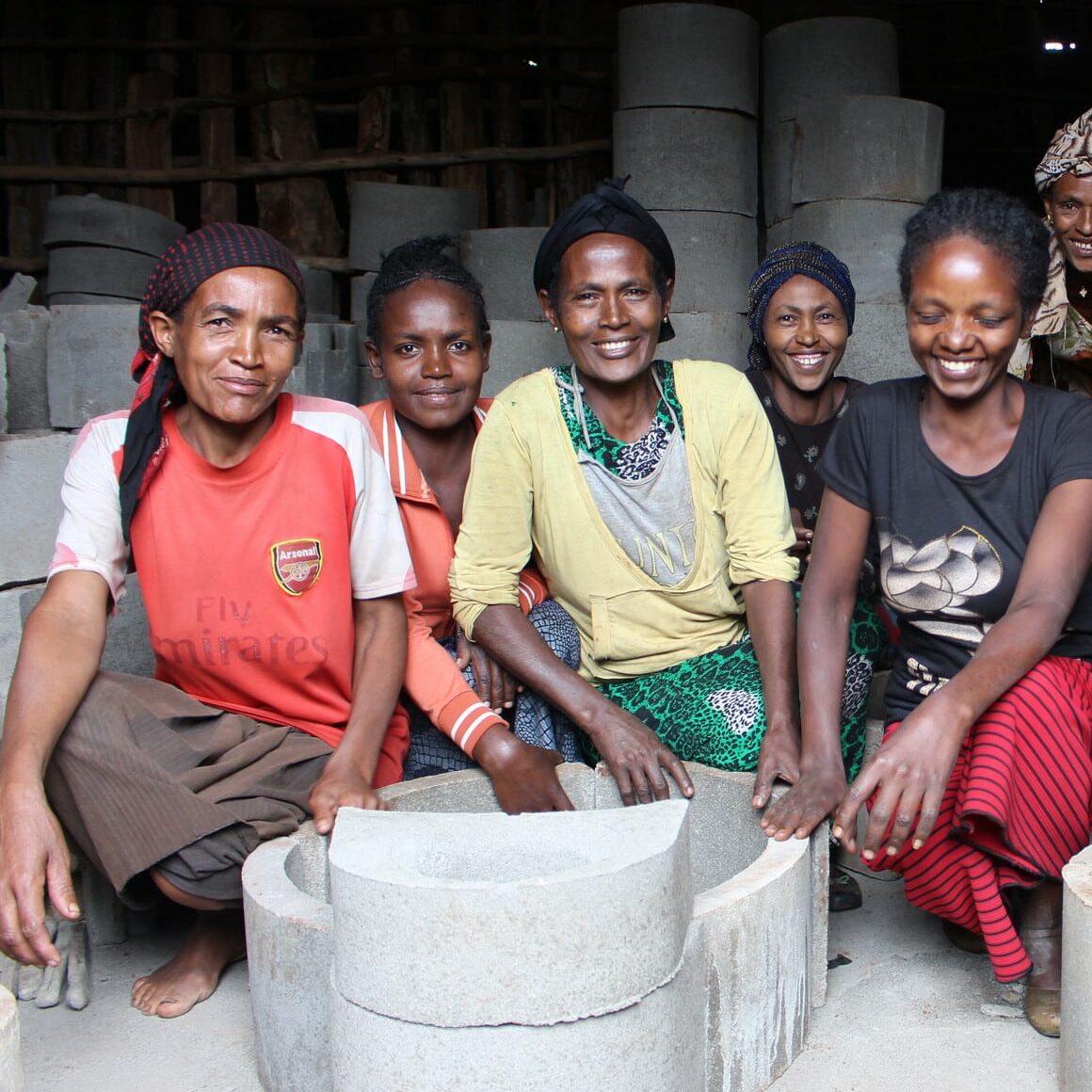
- Supporting communities to switch to fuel-efficient cookstoves that burn less firewood.
- Establishing carbon credit schemes where communities earn additional income for planting trees or reducing deforestation.
- Working with drought-affected pastoralists to regenerate degraded rangelands.
- Helping forest-based communities to develop forest-friendly businesses so they can earn money from the sale of forest coffee or honey, while reducing deforestation.
- Targeting assistance to reach female farmers, who are most vulnerable to climate change.
- Promoting the rearing of drought resilient livestock like goats and camels
The latest on climate change action



Watch



Related resources
Country
Kenya
Key focus areas
Act on climate change
Empower women
Increase food security and nutrition
From the Field Autumn Winter 2026
From the Field Autumn/Winter 2026 shares inspiring stories of how Farm Africa is transforming lives and livelihoods across eastern Africa. Discover how our work is helping farmers build resilient businesses, tackle malnutrition, access clean energy and create sustainable opportunities for their communities. This edition also celebrates the generosity of our supporters and the lasting impact they make possible.
Download (713.91kb)

Country
Kenya
Key focus areas
Act on climate change
Empower women
Increase food security and nutrition
Country
Ethiopia
Key focus areas
Act on climate change
Increase incomes
Protect ecosystems
Harnessing forests and ecosystems for a climate-nature-people triple win (Harness)
This four-page factsheet gives an overview of Farm Africa’s Harness initiative, funded by the Norway’s International Climate Forest Inititative (NICFI) through the Royal Norwegian Embasssy in Ethiopia (RNE). It aims to reduce and reverse deforestation and eco-system degradation. It also seeks to enhance climate resilience in Ethiopia by promoting an integrated landscape approach that simultaneously achieves poverty reduction, biodiversity conservation, and climate crisis mitigation across vulnerable forest landscapes.
Download (2.78mb)

Country
Ethiopia
Key focus areas
Act on climate change
Increase incomes
Protect ecosystems
Country
Ethiopia
Key focus areas
Act on climate change
Increase incomes
Protect ecosystems
The Forests for Sustainable Development programme: stories of impact
This publication captures the progress of the Forests for Sustainable Development programme as it partners with communities in the ecologically critical Bale Eco-region of Ethiopia to balance local livelihood needs with the protection of globally significant natural forests. Alongside the impact summary is a collection of stories from the community and an overview of key lessons learnt along the way.
Download (2.98mb)

Country
Ethiopia
Key focus areas
Act on climate change
Increase incomes
Protect ecosystems
Country
Tanzania
Key focus areas
Act on climate change
Boost productivity
Increase food security and nutrition
Seeds of change: focus on Tanzania
A collection of impact stories from Farm Africa’s work with smallholder farmers in Tanzania to improve nutrition, increase incomes and protect the environment through the use of climate-smart growing techniques.
Download (1.37mb)

Country
Tanzania
Key focus areas
Act on climate change
Boost productivity
Increase food security and nutrition
Country
Kenya
Key focus areas
Act on climate change
Boost productivity
Protect ecosystems
Agroforestry and precision farming in Kenya
This report explores the benefits of agroforestry and precision farming to food security, livelihoods, climate resilience and environmental conservation. Agroforestry involves planting trees on farms. Precision farming involves using GPS data to determine the optimal amounts of seeds, fertiliser and pesticide to use in each location.
By combining the two, farmers in Kenya have achieved a 60% increase in yields, while conserving biodiversity and reducing their carbon footprint.
Download (1.36mb)

Country
Kenya
Key focus areas
Act on climate change
Boost productivity
Protect ecosystems
Country
Ethiopia
Key focus areas
Act on climate change
Increase incomes
Protect ecosystems
Strengthening Participatory Forest Management in Ethiopia
This policy brief outlines recommendations from Tree Aid and Farm Africa on how participatory forest management can be strengthened and scaled to protect Ethiopia’s forests.
Download (1.46mb)

Country
Ethiopia
Key focus areas
Act on climate change
Increase incomes
Protect ecosystems

