

Expert view
Kenya
26 August 2026
Seeing the Waitrose Foundation and Farm Africa in action in Kenya

Barney Smyth (right) pictured with Farm Africa staff on a farm in Kenya.
By Barney Smyth
Ethics & Sustainability Specialist, Waitrose Foundation
In August I was lucky enough to visit some of the flower and vegetable farms in Kenya for the first time that are part of our Waitrose Foundation programme, which is delivered in partnership with Farm Africa. Seeing the impact we are having together was inspiring, and I am totally in awe of the empowered and entrepreneurial farmers and workers who are part of our programme.
If you’re unfamiliar with the Waitrose Foundation, it’s our supply chain initiative that reinvests 2% of the sale of many of our fruit, vegetable and flower products back to our grower base to improve the livelihoods of our farmers, workers and their communities.
£27 million
Invested in 2,500 projects by the Waitrose Foundation over 20 years.
Importantly, it is worker and community-led, as they best know their local needs and how to address them. The Foundation has been operating for 20 years, and in that time we have delivered over 2,500 projects and invested more than £27m back to our growing communities. For the past eight years we have partnered with Farm Africa to deliver the programme in Kenya and Tanzania.
Supporting education
A big focus for community investment in the region is education projects. Updated government curriculums have introduced new requirements, particularly for schools to have science laboratories, and one of our partner farms supported equipping a robotics lab in their community school.
It was encouraging to hear teachers report improved attendance, better grades in national exams and more young girls looking to pursue careers in Science Technology and Maths (STEM). In particular, I loved speaking with Sasha in our herb farming community, who is looking to become a neuroscientist, and Ian, Beth and Hemstone in our veg farming community, who won the national robotics championship and are now representing their school at the World Robot Olympiad Open Championships in India.
The project that stood out most significantly was the Simotwet Special School, where the Foundation supported a purpose-built school for children with additional needs. The impact was truly phenomenal. The headteacher Joan demonstrated how children use specially equipped classrooms, how paving means they no longer need to be lifted throughout the site (as wheelchairs would previously get stuck in the mud), and how clean washing facilities with solar-powered hot water allow the learners to bathe with dignity.
Seeing how transformative this project was for the schoolchildren, and the future impact it will have is something that I haven’t been able to stop thinking about.
Improving healthcare
Another key focus for project investment has been healthcare. With Farm Africa, we have delivered 16 health projects, one being a new surgical block at the Eldama Ravine Referral Hospital Eldama Ravine Referral hospital, which was particularly special. The facility receives 600 visits per month, and the maternity ward had seen a baby born only a few hours ago. 
Speaking with Sylviah, a Community Nutritionist at Muramati Health Centre, was inspiring as I learnt about her determination to upgrade the facility to offer more services and her vision to build a kitchen garden to support her community nutrition projects.
Economic empowerment
A third area of investment is economic empowerment and we met a range of workers who have been supported by microloans. Since starting our programme, we have disbursed over 10,000 loans.
Learning from beneficiaries about the importance of these loans was immensely valuable and demonstrates their significant impact.

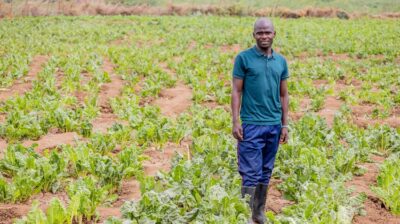
Most workers use them to pay for school fees, particularly secondary school, which allows them to keep their children in school. Some used their loans to generate additional income. For example, we met Michael, pictured above, a veg farm worker who invested in a cow and is able to now sell the milk – the entrepreneurial spirit of the workers was inspiring.
Protecting the environment
Environment and green energy is another area where we have been supporting workers and their households. Most commonly this has been the provision of energy efficient cookstoves—we have distributed over 21,000 of these.
Learning about the benefits of these is quite mind blowing – workers, typically women, save considerable time and money through not having to collect firewood or coal, have a safe cooking set up and are not breathing in harmful smoke, which in turn has a positive health benefit too, reducing the number of respiratory conditions.
Water and sanitation
Finally, the fifth area of investment has been water and sanitation. Getting to understand the critical needs for more water security and WASH (water, sanitation and hygiene) projects was hugely insightful. Roughly 44% of rural Kenyans do not have access to clean or improved drinking water sources.
It was so heartening to meet the Kalalu community, pictured above, and to hear of their appreciation for the Foundation providing piped clean water. The community is in a semi-arid area and the need for water was particularly apparent, as it previously required long journeys to water sources with donkeys.
Ironically, we were celebrating the new access to water whilst the heavens had opened in a dramatic and eventful downpour! But this in itself brought home the complexities of farming in such a climatically volatile region.
Throughout the week I was impressed by how capable and empowered the worker committees we met were to advocate for their needs and represent their peers. They were incredibly warm and welcoming, so gracious and articulate in explaining not only how the Foundation has supported them but also their future needs.
Meeting the workers and community members gave me even more drive to share their stories with our customers and ensure we, with Farm Africa, continue to enable them to improve their livelihoods – and we’re grateful to Farm Africa’s expertise and support.
I urge you to look for the Waitrose Foundation label when you’re shopping in store and be reminded that by buying some vegetables or flowers from Kenya, you really are playing an integral part in delivering a significant and transformative impact to our workers and their communities, in turn creating a resilient and sustainable supply chain.
Through partnerships with companies like Waitrose, Farm Africa helps create resilient and sustainable opportunities for the farmers and workers who grow our food in eastern Africa. To explore how a partnership with Farm Africa could strengthen your supply chain and the communities behind it, contact our corporate team at [email protected]

