
Stories
Tanzania
10 June 2026
The house that farming built: Teluvina’s story

Smallholder farmer and entrepreneur Teluvina Chiwanga, from Tanzania’s Dodoma region, increased her income through sorghum farming, vegetable growing and other business ventures – helping her complete the family home she had spent ten years building.
In 2012, Teluvina began building a new family home. Then the money ran out. With only maize and groundnut farming to rely on, there was no way to finish it. For ten years, the foundations sat untouched.

Learning to grow sorghum
That changed when Teluvina joined the NOURISH project funded by Norad and led by SNV in partnership with Farm Africa.

Tanzanian farmer Teluvina watering crops in her kitchen garden. Credit: Farm Africa/ Bertha Lutome
At a demonstration plot, Teluvina learnt how to cultivate sorghum and began growing it both for her family’s consumption and to sell.
Initially nervous about the new crop, her confidence quickly grew.
Farm Africa also introduced her to improved-quality seed varieties, helping her increase her yields and reduce crop losses from pests.
"The best training I have received from Farm Africa is learning how to use improved-quality seeds. Since using them, my yields are higher and my crops are less affected by pests.”
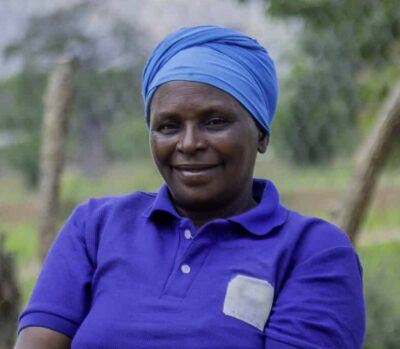
Teluvina Masinga
Smallholder farmer and entrepreneur
Farm Africa also helped connect Teluvina to a reliable market through contract farming with Tanzania Breweries Limited (TBL), giving her a guaranteed buyer for her sorghum harvests.
Teluvina explains, “The added advantage from Farm Africa is that I don’t have to buy the improved seeds. Through contract farming with TBL, I get the seeds and pay for them once the harvest is ready.”
Building a livelihood
Sorghum was just the beginning. Farm Africa supports farmers to reduce their risk by diversifying their incomes.

Teluvina in her kitchen garden. Credit: Farm Africa/ Berta Lutome
Alongside maize and groundnuts, Teluvina now grows sunflower, keeps livestock, and runs a soap-making business. Farm Africa also connected her with a local bank, enabling her to access finance to buy a new power tiller, which she now rents out to other farmers as an additional source of income.
“I earn a living from farming and other small businesses,” says Teluvina. “We have bought land over the years by selling cows, pigs and crops. I also make liquid soap for cleaning – that’s my other business.”
Income from these activities has enabled her to buy 70 acres of farmland.
Improving family life
Today, the house is complete.
“My life has changed a lot. I laid the foundations of the house in 2012, but I had to stop because I didn’t have any money. Then once I started to work with Farm Africa, in my second year, I managed to get the money to complete the house in 2022.”
Teluvina Masinga
Smallholder farmer and entrepreneur
Support from Farm Africa also introduced vegetable farming in kitchen gardens close to farmers’ homes.
Teluvina explains, “Previously we did not grow vegetables in that way. We had to go to the market to buy them. Right now, I have my own vegetables every day since I have a kitchen garden.”
The changes have transformed her family’s diet and wellbeing. She says, “Before we just ate ugali and beans, we only had vegetables twice a week, but now it’s every day. Now, we have good health and more energy.”

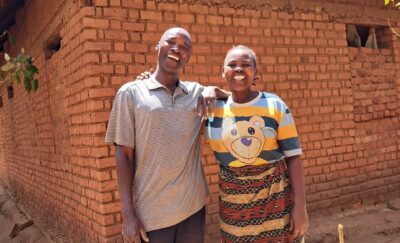
Teluvina stood outside her new home with her husband and children. Farm Africa/ Berta Lutome
Looking to the future
But the progress hasn’t come without difficulty.
Despite these achievements, farming remains vulnerable to increasingly unpredictable weather.
Climate change continues to threaten livelihoods, while labour shortages make it harder to manage large areas of land. Teluvina says: “If it doesn’t rain, we don’t grow anything. Last year it didn’t rain much, so we almost didn’t get anything.”
However, Teluvina is firmly focused on the future: “I want to finish my house with tiles and furniture and so forth. I want to send my children to school and extend my businesses.”

Teluvina stood outside her newly built house. Credit: Farm Africa/ Berta Lutome
The foundations were always there. Farm Africa helped her build on them. Teluvina’s story shows how access to training, quality inputs and markets can turn unfinished beginnings into real progress.

