


Stories
Uganda
20 May 2026
How Judith is farming a more secure future

In Muhooma, Kamuli District in eastern Uganda, Judith Aumah is using farming to support her family and help other women build more secure livelihoods – showing how farming can provide a living without destroying the earth they rely on.
A farmer, mother of three and chairperson of a local women’s support organisation, Judith works with women and young people in her community to strengthen their incomes through agriculture and small businesses.
Through support from Farm Africa, as part of the Enhancing Resilient Food Systems project funded by AGRA, Judith has received training in savings and credit, as well as sustainable farming practices.
Judith shares, “Farm Africa has empowered us with savings and credit skills. They trained us on the importance of saving and how we can use our savings as women.”

Ugandan farmer Judith Aumah with two other farmers in her field. Credit: Farm Africa/ Camilla Turner.
The project has also helped connect farmers to seed suppliers, improving access to inputs at more affordable prices while saving time and travel costs.
Judith explains, “They give us seeds at subsidised prices. For example, maize seeds we’ve been buying at 10,000 but Farm Africa brings them to us at 7000. They bring them direct to us, so we don’t have to find transport to go to those shops which are very far from us.”
Farming as a reliable livelihood
Judith grows maize, beans, rice, groundnuts and vegetables, producing food for her family while earning an income.
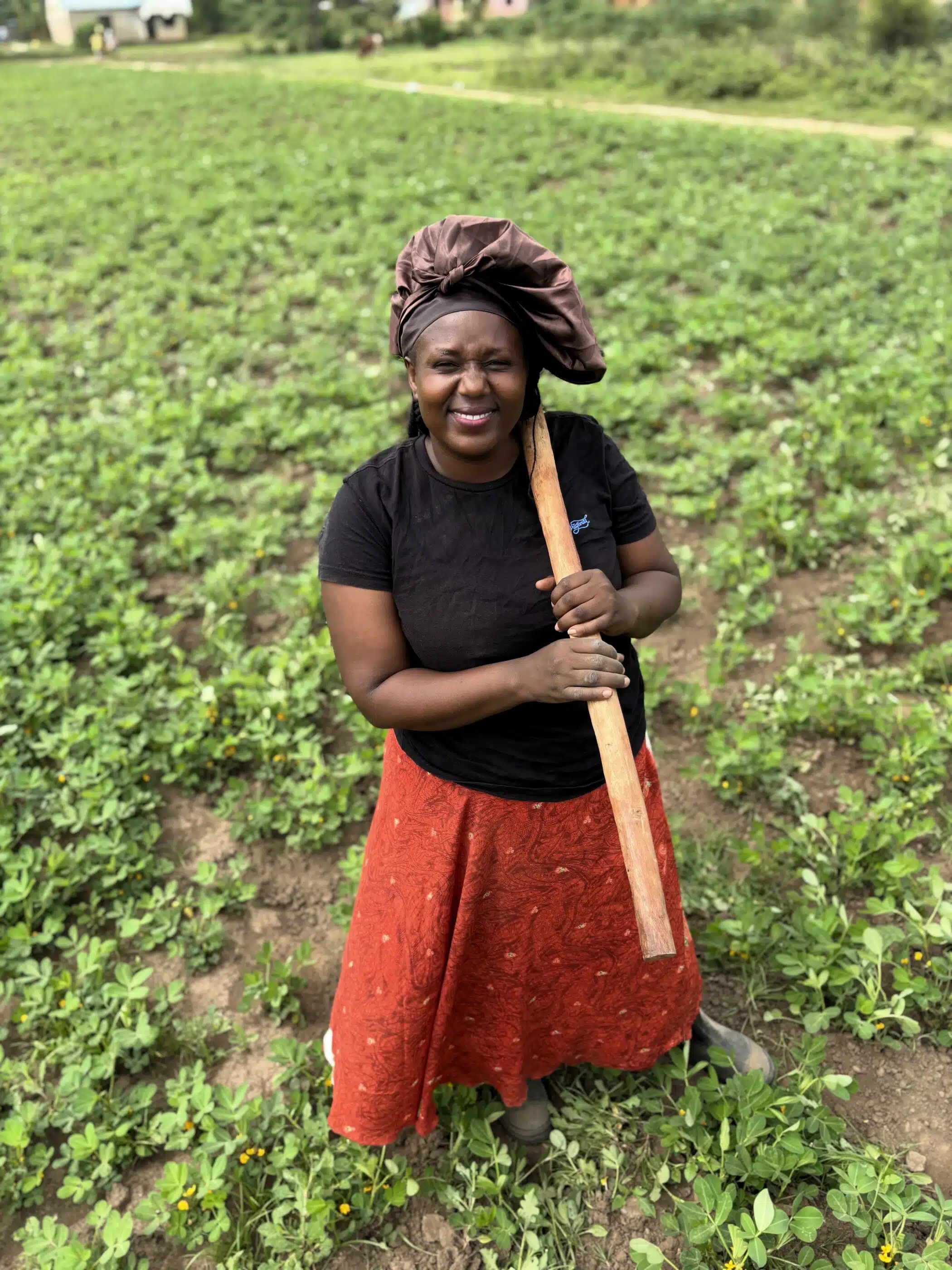
Judith a smallholder farmer from Uganda holding a hoe. Credit: Farm Africa/ Camilla Turner.
Judith says: “I’m a single mother and my children have never missed a meal because I always have food in the house. We also sell what we have planted and harvested, so we get money to take our children to school and do other businesses that help us develop.”
She uses organic farming methods, including composting cow dung and mulching, to improve soil health and increase yields.
“Here in Uganda, our soil is good and we do organic farming. We don't use harmful pesticides in our gardens. When we want fertilisers we use cow dung which yields well at the end of the season.”
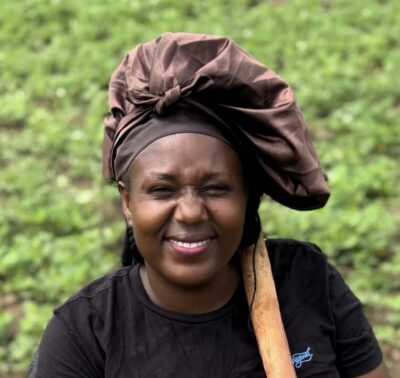
Judith Aumah
Farmer from Uganda
With training, Judith has also improved post-harvest handling, allowing crops to be stored for longer – reducing losses and giving her more control over when she sells. She says “we can now manage to keep our crops more than even one year.”
Building incomes and resilience
Through the group Judith leads, she trains women and young people on sustainable farming practices every Saturday, helping members increase productivity and build more stable incomes.
They also save small amounts each week, which enables them to access loans to invest in farming or small businesses.
Judith says, “In most banks it is hard to get loans. We encourage women and youth to save weekly so they can access credit to buy seeds and other inputs to develop farms or agribusinesses, selling produce like tomatoes, cabbage and beans.”
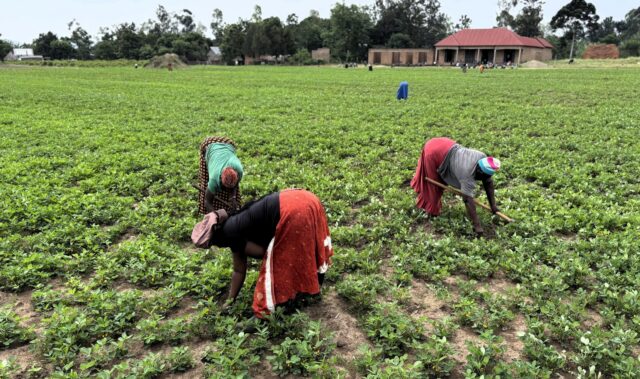
Ugandan farmer Judith with two other farmers tending to her farm. Credit: Farm Africa/ Camilla Turner.
As farming income can take several months to come in, members also learn practical skills to earn money in between harvests, creating additional income streams.
Judith explains, “In agriculture it takes like five months to harvest, so we teach them skills to make crafts like necklaces, bangles and shoes so they can sell them and earn money, which helps to take their children to school and have daily income.”
Adapting to climate challenges
Like many farmers, Judith is facing the effects of climate change: “Climate change is one of our biggest challenges, like now we’ve just planted and we are also ploughing but the rain is not there, which makes our crops not yield much.”
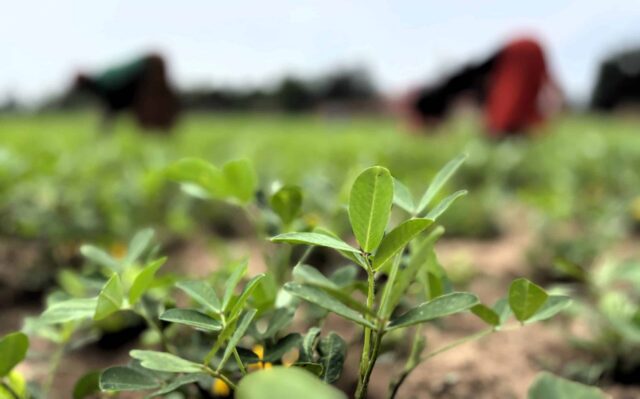
Crop growing in Judith’s field. Credit: Farm Africa/ Camilla Turner.
Without access to irrigation, unpredictable rainfall continues to affect harvests and incomes. Judith says, “We have to wait until it rains so that we can plant or weed. We need a solar irrigation system to keep our gardens moving.”
Looking ahead
Through savings, training and shared knowledge, Judith and others in her community are working hard to strengthen their livelihoods while farming in ways that support both their families and the land they depend on.
For Judith, this work is about independence – having the ability to make decisions about their lives and futures.
“They've helped us as women to be independent. By empowering women, we help families, especially children to have a better life. Now their mother will be able to take them to school and have food on the table.”
Judith Aumah
Farmer from Uganda
Judith shows that farming shouldn’t cost the Earth. It should empower women, strengthen livelihoods and help families build a more secure future.

